Don't Starve: Pocket Edition
- 4.2
- Rating
- 1.00M
- Installs
- $4.99
- Price

 Analysis by App-foxy
I approached Don't Starve: Pocket Edition as more than a portable survival game. I wanted to see how comfortably its strange wilderness can be read, controlled, and understood in everyday situations, because a game can be excellent in theory and still become tiring on a phone. My overall impression is that this is a demanding but rewarding adventure from Klei Entertainment Inc., with a distinctive hand-drawn world and a strong sense of consequence. It is not a gentle pick-up-and-play experience, yet it gives patient players plenty to learn.
The basic idea is wonderfully direct: stay alive in an unfamiliar wilderness while managing the practical problems that keep appearing around you. Food, shelter, darkness, exploration, and danger all compete for attention. The game does not treat survival as a short tutorial before the “real” adventure begins. Survival is the adventure, and every day asks me to make a slightly better decision than I made before.
That structure has helped the game find a large audience. It has more than a million installs and an average rating of 4.2 from roughly forty-eight thousand ratings, which fits my experience: this is a well-liked game with a clear identity, but its difficulty and mobile controls will not suit everyone. It costs $4.99, carries a Teen content rating, and runs on Android starting with version 5.0. The current version is 1.19.22.
You May Also Like

 Blood Strike: 2.5 Anniversary
Blood Strike’s Loadouts Turn Every Drop Into a Tactical Gamble
A close look at Blood Strike’s custom loadouts: how fast access to signature weapons reshapes its battle royale rhythm, rewards preparation, and narrows the gap between fights.

 Pandora - Music & Podcasts
Pandora’s Music Is Easy to Start, but Harder to Recover
Pandora’s strength is its low-effort path from a seed to a station. Its weak spot is how much confidence it asks you to place in connection, setup, and quiet recovery.

 8 Ball Pool
 Is Built on Rivalries, Rematches, and Routine
A close look at the rivalries, rematches, shared routines, and unanswered safety questions that turn a quick pool match into a persistent mobile community.

 Samsung Music
’s Quiet Strength Is Playing What You Already Own
Its reach comes less from spectacle than from dependable access to a personal library. That simplicity is both the app’s strongest retention engine and its ceiling.

 AccuWeather: Weather Radar
AccuWeather Review: A Quick, Clear Forecast for Everyday Decisions
For everyday plans, the best forecast is the one you can understand quickly. AccuWeather makes rain timing, radar, and local conditions easy to act on, with a few trade-offs.

 Hill Climb Racing
Why Hill Climb Racing Still Turns Crashes Into One More Run
A tiny car, a bumpy hill and one more upgrade: Hill Climb Racing keeps resurfacing because its simple chaos makes every near-miss feel personal.
More From Our News Desk



How clearly the wilderness communicates
I find the wilderness communicates most clearly when I treat its visual details as clues rather than decoration: a new area is worth reading before I rush through it, and a familiar route can be more useful than an ambitious detour. That habit helps me make better choices without expecting the game to spell out every consequence. It also raises a practical question: how can I keep those observations useful when a session is interrupted or spread across several days?
Readability and navigation
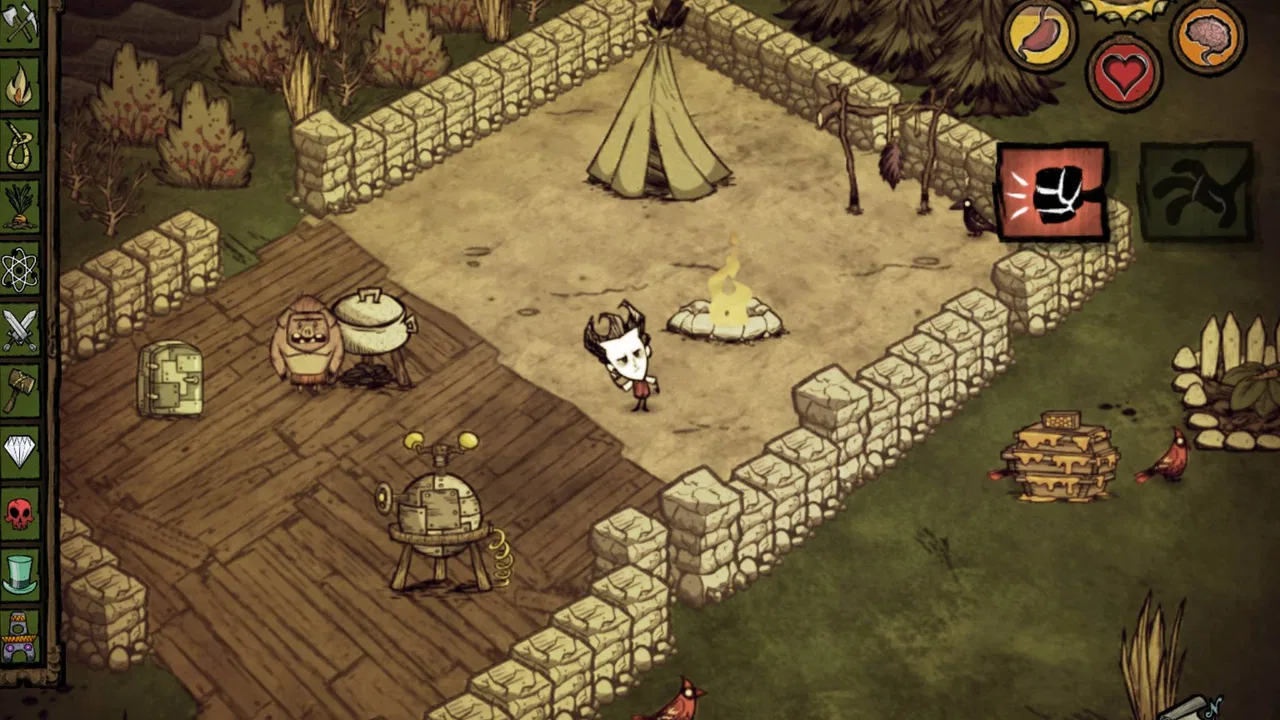
The visual design is one of the strongest parts of the experience. The world looks like an illustrated nightmare rather than a realistic landscape, with exaggerated shapes, unusual creatures, and a deliberately unsettling atmosphere. That style gives the game personality, but it also makes the screen busy. When several objects, resources, and threats occupy the same area, I sometimes need a moment to understand what I am looking at before acting.
That learning curve is important for new players. The game does not feel like a standard adventure where the next objective is always obvious. I have to observe patterns, remember what I discovered, and accept that an experiment may end badly. The interface becomes easier to interpret with practice, but the first sessions can feel opaque if I expect constant explanations.
Navigation works best when I slow down and treat exploration as a planned activity. I found it useful to pause mentally at the edge of a new area, identify nearby resources, and avoid wandering too far when daylight is running short. This sounds simple, but it prevents a common mistake: focusing on one interesting object while forgetting the time of day and the route back.
The game’s readable structure comes from its recurring priorities rather than from a heavily guided interface. I can usually ask myself three questions: what will keep me alive soon, what can wait, and where will I be safe when conditions change? That mental checklist is more useful than rushing through every available interaction.
For players who benefit from predictable routines, the early game can become much more manageable after establishing a familiar pattern. I prefer to spend the first part of a session gathering essentials and learning the surroundings, then use later time for riskier exploration. This approach reduces visual and cognitive overload because I am not trying to solve every problem at once.
One less obvious strength is how much the game rewards personal note-taking, even if that note-taking happens outside the app. I remember which areas felt safe, where useful materials appeared, and which mistakes caused trouble. A short written reminder can make the next session feel far less confusing. This is especially helpful for players who do not play every day and may forget the meaning of a crafting choice or environmental warning.
There is a trade-off here. The freedom to discover things is satisfying, but players who need explicit instructions may find the opening frustrating. I would not recommend starting with the expectation that the game will explain every system in a comfortable sequence. It asks me to tolerate uncertainty, and that is part of its design rather than a temporary inconvenience.
Motor and sensory considerations
Touch control changes the feel of this adventure considerably. On a phone, actions that would be effortless with a mouse or controller require more deliberate finger placement. Selecting the intended object in a crowded area can take concentration, particularly when I am under pressure. A small mistake is more noticeable here because the world does not always give me time to recover.
I found that the game is easier to handle when I avoid frantic tapping. Short, purposeful interactions are more reliable than trying to move, inspect, collect, and respond all at once. Before entering a dangerous area, I like to prepare what I need and create enough space around my character to reduce accidental selections. This is a practical habit, not merely a preference: a tidy position makes the next few actions easier to read and perform.
Players with limited fine-motor control may find the mobile format demanding, especially during moments that combine movement, timing, and danger. The game’s survival pressure can turn a minor control error into a serious setback. I would try it with a larger screen or a compatible controller if that setup is available and comfortable, but I would not assume that every player will have access to those options.
Sensory load is another consideration. The visual style is dark, unusual, and intentionally tense. Sudden threats and the constant possibility of losing progress can make a session feel mentally intense even when the screen is not crowded. The atmosphere is a major reason I enjoy the game, but it may be tiring for someone who prefers calm colors, gentle pacing, or low-pressure exploration.
Sound also contributes to the mood, although I often choose when to play with reduced distractions around me. A quiet room helps me notice what is happening and make better decisions, while a noisy commute makes the game harder to follow. This is not a title I enjoy equally in every environment. It rewards attention, and divided attention can lead to poor choices quickly.
One useful approach is to separate learning sessions from ambitious sessions. When I am learning a system, I avoid playing while tired or surrounded by interruptions. Once the basic routine feels familiar, I can handle shorter sessions more comfortably. This makes the game more accessible to my own changing energy level, even though it does not remove the underlying difficulty.
Situational access in everyday play
The portable format is most appealing when I have a reasonably focused block of time. A quiet evening at home works well because I can explore, organize resources, and respond to danger without constantly stopping. I also enjoy a short session when I already know my immediate goal, such as collecting a particular material or preparing for the next stage of survival.
It is less suitable for every spare minute. If I am waiting in a loud place, being interrupted by conversation, or switching between tasks, I find it difficult to maintain the awareness the game expects. A careless moment can undo careful preparation. For that reason, I would not choose it as my first option for a game that must be played with one hand while commuting or while frequently looking away from the screen.
That limitation does not make the mobile version pointless. It simply changes how I use it. I treat it as a focused portable adventure rather than background entertainment. When I have only a few minutes, I choose a contained task and avoid starting a dangerous expedition. When I have more time, I can let the survival loop develop naturally.
A realistic everyday scenario would be playing after dinner with notifications silenced and a clear plan for the session. I might spend the first few minutes checking supplies, then explore a nearby area while keeping a safe return route in mind. If I know I will be interrupted, I stop before taking a major risk. That small adjustment makes the experience much less stressful than trying to play impulsively between unrelated tasks.
The game also suits players who enjoy learning through repetition. A failed attempt can teach me where I misjudged timing, preparation, or distance. However, that same structure may feel discouraging for someone who wants immediate progress every time they open a game. The portable edition is not a substitute for a relaxing puzzle game or a story adventure with frequent checkpoints. It asks for attention and accepts failure as part of the lesson.
Compared with more conventional adventure games on Android and iOS, this one gives me less narrative direction and more responsibility for deciding what matters. Compared with simpler survival games, it feels more distinctive and more demanding because the world has its own rules and mood. A traditional action adventure may be better for someone who wants clear objectives and forgiving recovery. A casual survival title may be better for someone who wants short, low-consequence sessions. I choose this game when discovery and tension matter more than convenience.
Remaining barriers and practical friction
The biggest barrier is not the price or installation process; it is the combination of complexity, pressure, and touch interaction. The game expects me to remember what I have learned and apply it under changing conditions. That is rewarding once the systems click, but it can feel like work before they do.
The Teen rating is also worth taking seriously. The unsettling creatures, dark tone, and survival consequences are central to the experience. Someone looking for a cheerful wilderness game may be surprised by how uncomfortable the atmosphere can become. I appreciate that the mood is consistent, but it is not universally inviting.
Another friction point is the cost of mistakes. Losing a run can be emotionally heavier than losing a few minutes in a casual game, especially when I had invested time in preparation. I learned to view each attempt as a source of information rather than as a test I must pass immediately. Players who dislike restarting or repeating early routines should think carefully before buying.
The game’s unusual presentation can create a readability challenge for some players. Its visual language is expressive rather than plain, and objects do not always announce their purpose in the way a modern tutorial-driven game might. I recommend giving the opening time to settle in instead of judging it after a rushed first session. If the basic look and interaction style remain confusing after that, the game may simply not match your needs.
There are also practical questions about device comfort. A small phone screen can make details and selections feel cramped, while a larger display may be easier for longer sessions. I would check how comfortable the controls feel on the device I plan to use before committing to extended play. The game is available for Android with a minimum operating system of 5.0, but technical compatibility alone does not guarantee a comfortable experience.
For players who need extensive customization of text size, contrast, input behavior, or sensory effects, I would approach this purchase carefully and test the available presentation and control options on their device. I do not see the game as a universally accessible design; its strengths come with real demands. That does not diminish its quality, but it does mean the right audience matters more than the install count.
Who should play it, and who should skip it
I recommend it to players who enjoy experimentation, resource planning, and worlds that refuse to explain themselves completely. If you like learning from mistakes and gradually developing a reliable routine, the survival loop can become surprisingly absorbing. The hand-drawn style is also a strong reason to try it: few mobile adventures create such a recognizable atmosphere.
I would be more cautious for players who need immediate clarity, forgiving controls, or a relaxing experience after a long day. The game can be relaxing once I understand what I am doing, but getting there requires patience. It is also a poor fit for anyone who expects every session to deliver a clean victory or a clearly marked objective.
My most useful advice is to begin slowly, protect your return route, and resist the temptation to spend every moment exploring. Prepare before taking risks, use familiar areas to build confidence, and consider playing on a larger screen if touch controls feel cramped. These habits do not make the game easy, but they make its difficulty feel more fair and understandable.
The best way to approach this game is as a focused survival experiment, not as a casual time filler. That mindset changes the meaning of failure. Instead of asking why a session went badly, I can identify the decision that led there and adjust the next attempt. The game becomes a conversation between curiosity and caution.
My inclusive verdict
After spending time with it, I see this as a strong adventure for a specific kind of player rather than a universal recommendation. Klei Entertainment Inc. has created a world with a memorable visual identity, meaningful survival choices, and enough mystery to keep me thinking after I stop playing. The mobile version brings that experience to a convenient format, but convenience should not be confused with simplicity.
Its accessibility in everyday contexts depends heavily on attention, screen size, motor comfort, and tolerance for sensory tension. I can make it work well by choosing quiet sessions, planning smaller goals, and avoiding rushed interactions. Players with different needs may find those adjustments helpful, while others may still encounter barriers that the game’s design does not solve.
The $4.99 purchase feels reasonable to me when I consider the depth of the survival loop, but value depends on whether I enjoy repeating attempts and learning through setbacks. The strong rating from around forty-eight thousand ratings and its reach beyond a million installs suggest broad appeal, yet neither figure changes the central truth: this is a demanding game with a clear personality.
I would recommend Don't Starve: Pocket Edition to a friend who wants a dark, thoughtful survival adventure and is comfortable investing attention in learning its rules. I would point someone seeking simple controls, gentle pacing, or effortless short sessions toward a different adventure instead. For the right player, though, this pocket-sized wilderness is memorable precisely because it asks me to pay attention, prepare carefully, and earn every successful day.
FAQs for Don't Starve: Pocket Edition
01What is Don’t Starve: Pocket Edition?
Don’t Starve: Pocket Edition is the mobile version of Klei Entertainment’s challenging survival adventure game. You play as Wilson, a scientist trapped in a strange wilderness filled with hostile creatures, unpredictable weather, and limited resources. The goal is to explore, gather materials, craft tools, manage hunger and sanity, and survive for as long as possible while uncovering the world’s secrets.
02Is Don’t Starve: Pocket Edition difficult for new players?
Yes, the game is intentionally demanding and may take time to learn. Death is a normal part of the experience, especially during your first attempts, because the environment offers little guidance and many dangers are not immediately obvious. However, each failure teaches you something about crafting, seasons, creatures, and resource management, making later attempts more strategic and rewarding.
03Can I play Don’t Starve: Pocket Edition offline?
Don’t Starve: Pocket Edition is primarily designed as a single-player experience and can generally be played without a constant internet connection after it has been installed. This makes it suitable for travel or situations without reliable mobile data. You may still need internet access for downloading the game, receiving updates, checking platform services, or handling purchases through the relevant app store.
04Does Don’t Starve: Pocket Edition include multiplayer?
The Pocket Edition is focused on the original single-player survival experience rather than online cooperative play. You control one character and must manage exploration, crafting, food, shelter, sanity, and combat alone. Players looking for multiplayer survival should investigate the separate Don’t Starve Together release, if it is available for their device and region, because it is a different product with its own features.
05What devices are compatible with Don’t Starve: Pocket Edition?
Compatibility depends on your Android or iOS version, device hardware, and the requirements listed on the official store page. Because the game contains a large, constantly changing world, older phones and tablets may experience slower performance, longer loading times, or control limitations. Before downloading, check the current Google Play or App Store listing and make sure you have enough free storage.
Pros
- Distinctive hand-drawn art style creates a memorable survival atmosphere.
- Randomly generated worlds make each new playthrough feel different.
- Wide variety of creatures
- resources
- and crafting recipes to discover.
- Offline play makes it convenient for travel or areas without internet access.
- Multiple playable characters offer different abilities and survival strategies.
Cons
- The touch controls can feel awkward during fast combat or precise actions.
- Permadeath may frustrate players who lose hours of progress unexpectedly.
- The difficulty curve is steep and offers little guidance to newcomers.
- Small mobile screens can make inventory management feel cramped.
- Some content and characters may require separate purchases or progression.

Don't Starve: Pocket Edition
Gallery